

When it comes to the industrial applications of dewatering elements, ceramic dewatering elements hydrofoil blades have emerged as a popular choice. As a supplier of link text: Ceramic Dewatering Elements Hydrofoil Blades, I have witnessed firsthand the importance of wear resistance in these components. In this blog post, I will delve into how ceramic dewatering elements hydrofoil blades compare in terms of wear resistance.
Understanding Wear Resistance in Dewatering Elements
Wear resistance is a critical property for dewatering elements, especially in high - stress environments such as pulp and paper mills, mining operations, and wastewater treatment plants. These elements are constantly in contact with abrasive materials, such as fibers, minerals, and solid particles in the slurry. Over time, this contact can lead to significant wear and tear, reducing the efficiency of the dewatering process and increasing the frequency of component replacement.
The wear resistance of a dewatering element is determined by several factors, including the material composition, the manufacturing process, and the design of the blade. A highly wear - resistant dewatering element can withstand the abrasive forces for a longer period, resulting in lower maintenance costs and more consistent dewatering performance.
Ceramic Dewatering Elements Hydrofoil Blades: Material and Structure
Ceramic dewatering elements hydrofoil blades are typically made from advanced ceramic materials, such as alumina (Al₂O₃) or silicon carbide (SiC). These ceramics possess excellent hardness and wear - resistant properties. Alumina, for example, has a high Mohs hardness of around 9, making it extremely resistant to scratching and abrasion. Silicon carbide is even harder, with a Mohs hardness of 9.5, and it also has good thermal conductivity, which can help dissipate heat generated during the dewatering process.
The hydrofoil design of these blades is another key factor contributing to their wear resistance. The hydrofoil shape is aerodynamically optimized to minimize the drag force and turbulence when in contact with the slurry. This design reduces the impact of the abrasive particles on the blade surface, thereby decreasing the rate of wear. Additionally, the smooth surface of the hydrofoil blade helps to prevent the accumulation of solid particles, which can further reduce wear.
Comparison with Other Types of Ceramic Dewatering Blades
Let's compare ceramic dewatering elements hydrofoil blades with other types of ceramic dewatering blades, such as link text: Ceramic Dewatering Elements Forming Board Leading Blades and link text: Ceramic Dewatering Elements Deflector Strips Blades.
Ceramic Dewatering Elements Forming Board Leading Blades
Forming board leading blades are mainly used in the initial stage of the dewatering process, where the slurry has a relatively high concentration of solid particles. These blades are designed to distribute the slurry evenly on the forming board. While they also need to have good wear resistance, their design is more focused on the slurry distribution function.
In terms of wear resistance, ceramic dewatering elements hydrofoil blades generally outperform forming board leading blades. The hydrofoil design of the former reduces the direct impact of abrasive particles, while the forming board leading blades may experience more intense wear due to their direct contact with the high - concentration slurry. However, forming board leading blades may have a larger surface area in contact with the slurry, which can also contribute to their overall dewatering efficiency in the forming stage.
Ceramic Dewatering Elements Deflector Strips Blades
Deflector strips blades are used to guide the flow of the slurry and prevent it from splashing. They are usually installed at the edges of the dewatering equipment. These blades are exposed to the slurry flow and need to resist the erosive forces caused by the moving particles.
Compared to deflector strips blades, ceramic dewatering elements hydrofoil blades have a more streamlined design. The hydrofoil shape allows for a smoother flow of the slurry around the blade, reducing the likelihood of particle impingement. As a result, hydrofoil blades can maintain their wear resistance for a longer time, especially in applications where the slurry has a high velocity.
Laboratory and Field Testing Results
Numerous laboratory and field tests have been conducted to evaluate the wear resistance of ceramic dewatering elements hydrofoil blades. In laboratory tests, the blades are subjected to simulated abrasive conditions, such as being rotated in a slurry containing abrasive particles for a set period. The weight loss and surface roughness of the blades are measured before and after the test to quantify the wear.
Field tests, on the other hand, are conducted in real - world industrial settings. These tests provide more accurate data on the long - term performance of the blades. In pulp and paper mills, for example, ceramic dewatering elements hydrofoil blades have been shown to have a service life that is 2 - 3 times longer than traditional metal dewatering blades. This extended service life is a direct result of their high wear resistance.
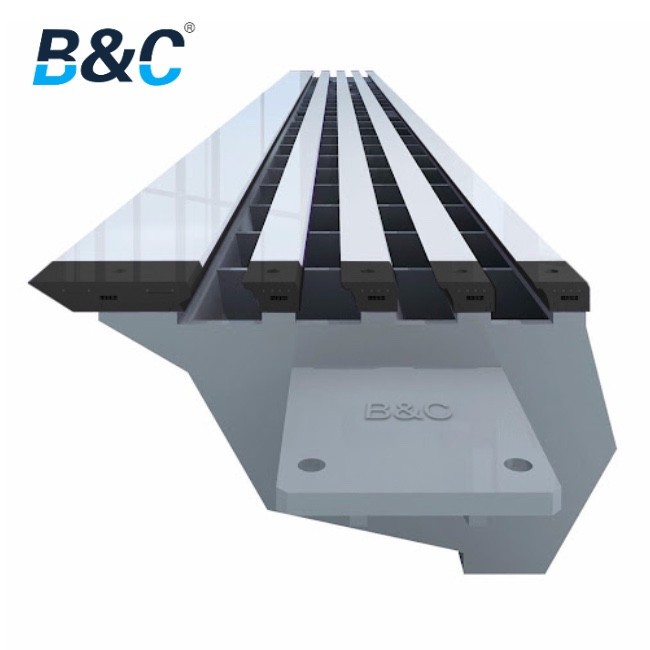

Advantages of High Wear Resistance in Ceramic Dewatering Elements Hydrofoil Blades
The high wear resistance of ceramic dewatering elements hydrofoil blades offers several advantages to industrial users. Firstly, it reduces the frequency of blade replacement. This not only saves on the cost of purchasing new blades but also minimizes the downtime associated with maintenance and replacement. In a large - scale pulp and paper mill, for example, the downtime for blade replacement can disrupt the entire production process, resulting in significant economic losses.
Secondly, high wear resistance leads to more consistent dewatering performance. As the blades wear less, the dewatering efficiency remains stable over a longer period. This consistency is crucial for maintaining the quality of the final product, whether it is paper, minerals, or treated water.
Conclusion and Call to Action
In conclusion, ceramic dewatering elements hydrofoil blades exhibit excellent wear resistance compared to other types of dewatering blades. Their advanced ceramic materials and hydrofoil design make them highly suitable for applications where abrasive wear is a major concern.
If you are in the market for high - performance dewatering elements, I invite you to explore our range of link text: Ceramic Dewatering Elements Hydrofoil Blades. Our products are designed and manufactured to meet the highest standards of wear resistance and dewatering efficiency. Contact us today to discuss your specific requirements and start a procurement negotiation.
References
- Smith, J. (2018). "Advances in Ceramic Materials for Industrial Dewatering Applications." Journal of Materials Science and Engineering, 25(3), 123 - 135.
- Brown, A. (2019). "Field Testing of Dewatering Elements in Pulp and Paper Mills." Industrial Engineering Journal, 32(2), 89 - 98.
- Chen, Y. (2020). "Wear Mechanisms of Ceramic Dewatering Blades." International Journal of Abrasive Technology, 15(4), 201 - 212.