

Ceramic Dewatering Elements
Ceramic dewatering elements are much more wear resistant than their plastic equivalents. There are many different materials available, all of which can be tailored to meet customer requirements (machine speed, filler content, etc.). Ceramic dewatering elements are widely used in the forming section of paper machines, such as forming plates, suction boxes, vacuum suction box panels, etc. Its use greatly improves the speed of paper machines, the quality of paper, and reduces costs.
Benefits of Ceramic Dewatering Elements
Wear resistance: Technical ceramics is known for its exceptional wear resistance and ability to resist wear and corrosion. This is crucial in an industry where equipment is exposed to very harsh conditions.
Chemical stability: Ceramic dewatering elements are resistant to the chemicals used in pulp production, including bleach and other aggressive substances. This makes ceramics a reliable choice for components that come into contact with these substances.
Temperature resistance: Ceramic dewatering elements can handle high temperatures, which is important when the processes require heat treatment and temperature regulation.
Precision and accuracy: Ceramic dewatering elements can be manufactured with high precision and have a smooth surface, which is important to achieve the desired quality of the material produced.
Long service life: Ceramic dewatering elements have a long service life and require minimal maintenance, which reduces operating costs.
-
![Ceramic Dewatering Element Bi-chamber High Vacuum Box]() Ceramic Dewatering Element Bi-chamber High Vacuum BoxThe ceramic dewatering element bi-chamber high vacuum suction box ensures the most effective dewatering performance. In order to lower overall energy usage, the main goal is to appropriately drain...read more
Ceramic Dewatering Element Bi-chamber High Vacuum BoxThe ceramic dewatering element bi-chamber high vacuum suction box ensures the most effective dewatering performance. In order to lower overall energy usage, the main goal is to appropriately drain...read more -
![Paper Mill Ceramic Dewatering Element Forming Board]() Paper Mill Ceramic Dewatering Element Forming BoardThe forming board is used for paper making and installed in the forming section next to head box. With high wear resistant Alumina ceramic blades on the corrosion-resistant steel box for...read more
Paper Mill Ceramic Dewatering Element Forming BoardThe forming board is used for paper making and installed in the forming section next to head box. With high wear resistant Alumina ceramic blades on the corrosion-resistant steel box for...read more -
![Ceramic Dewatering Element High Vacuum Suction Box Cover]() Ceramic Dewatering Element High Vacuum Suction Box CoverFor optimal drainage performance in the forming portion of paper producing machines, use a high vacuum suction box cover with a ceramic dewatering element. The high vacuum suction box cover has...read more
Ceramic Dewatering Element High Vacuum Suction Box CoverFor optimal drainage performance in the forming portion of paper producing machines, use a high vacuum suction box cover with a ceramic dewatering element. The high vacuum suction box cover has...read more -
![Ceramic Dewatering Element High Vacuum Suction Box]() Ceramic Dewatering Element High Vacuum Suction BoxMaximum dewatering performance is achieved with the high vacuum suction box of the ceramic dewatering element. The primary purpose is to properly drain the wet web of water in the initial stages...read more
Ceramic Dewatering Element High Vacuum Suction BoxMaximum dewatering performance is achieved with the high vacuum suction box of the ceramic dewatering element. The primary purpose is to properly drain the wet web of water in the initial stages...read more -
![Paper Mill Ceramic Dewatering Element Hydrofoil]() Paper Mill Ceramic Dewatering Element HydrofoilCeramic dewatering element hydrofoils for paper making, applied to drain water from the wet web. Providing support and protection to the forming fabric and guarantees the uniform level. High wear...read more
Paper Mill Ceramic Dewatering Element HydrofoilCeramic dewatering element hydrofoils for paper making, applied to drain water from the wet web. Providing support and protection to the forming fabric and guarantees the uniform level. High wear...read more -
![Paper Mill Ceramic Dewatering Element Wet Suction Box]() Paper Mill Ceramic Dewatering Element Wet Suction BoxThe wet suction box with ceramic dewatering element for papermaking. The primary purpose is to remove the appropriate amount of water from the wet web to save energy consumption.read more
Paper Mill Ceramic Dewatering Element Wet Suction BoxThe wet suction box with ceramic dewatering element for papermaking. The primary purpose is to remove the appropriate amount of water from the wet web to save energy consumption.read more
A... -
![Ceramic Dewatering Element Low Vacuum Suction Box Cover]() Ceramic Dewatering Element Low Vacuum Suction Box CoverCeramic dewatering cover for the low vacuum suction box in paper making machines.read more
Ceramic Dewatering Element Low Vacuum Suction Box CoverCeramic dewatering cover for the low vacuum suction box in paper making machines.read more
The low vacuum suction box's ceramic dewatering covers are used to drain surplus water that isn't drained... -
![Silicon Carbide Ceramic Dewatering Element Transfer suction box]() Silicon Carbide Ceramic Dewatering Element Transfer sucti...Long-lasting and highly effective felt suction box, commonly known as an Uhle box. placed in the papermaking machines' pressing part to improve drainage performance It is possible to design it...read more
Silicon Carbide Ceramic Dewatering Element Transfer sucti...Long-lasting and highly effective felt suction box, commonly known as an Uhle box. placed in the papermaking machines' pressing part to improve drainage performance It is possible to design it...read more -
![Ceramic Dewatering Element Low Vacuum Suction Box]() Ceramic Dewatering Element Low Vacuum Suction BoxCeramic dewatering element low vacuum suction box installed between wet suction box and high vacuum suction box in the forming section of paper making machines. The main function of low vacuum...read more
Ceramic Dewatering Element Low Vacuum Suction BoxCeramic dewatering element low vacuum suction box installed between wet suction box and high vacuum suction box in the forming section of paper making machines. The main function of low vacuum...read more -
![Ceramic Dewatering Element Felt Suction Box]() Ceramic Dewatering Element Felt Suction BoxHigh efficiency and long lasting felt suction box, also called Uhle box.read more
Ceramic Dewatering Element Felt Suction BoxHigh efficiency and long lasting felt suction box, also called Uhle box.read more
Installed in the pressing section of paper making machines for drainage performance.
Can be designed to... -
![Ceramic Dewatering Element Flat Suction Box]() Ceramic Dewatering Element Flat Suction BoxHigh efficiency and long lasting flat suction box.read more
Ceramic Dewatering Element Flat Suction BoxHigh efficiency and long lasting flat suction box.read more
Installed in the forming section of paper making machines for drainage performance and paper quality improvement.
Specially... -
![Ceramic Dewatering Element Wet Suction Box Cover]() Ceramic Dewatering Element Wet Suction Box CoverA spare wear component for the corrosion-resistant steel box is the ceramic dewatering element wet suction box cover. The primary purpose of the ceramic dewatering cover is to remove the...read more
Ceramic Dewatering Element Wet Suction Box CoverA spare wear component for the corrosion-resistant steel box is the ceramic dewatering element wet suction box cover. The primary purpose of the ceramic dewatering cover is to remove the...read more


Why Choose Us
Quality Assurance
For guaranteeing product quality and on-time delivery, Beichen built new manufacturing factory in 2016 with floor area 13900㎡ in High-tech Zone. Key parts of the factory are two workshops and one warehouse together with a office building.
Advanced Production Equipment
With advanced production equipment, skilled technicians and scientific management, the overall production capacity realized times increase. For the ceramic cones production line, we own isostatic pressing machine, CNC grinders, electric kiln and gas kiln and skilled grinding technology. We realize the full process production all by own both for ceramic cones and stainless steel cones ceramic lining and grinding.
Strict Inspection
Before being shipped, each product must go through a comprehensive inspection. Every pulp cleaner, spare part, and ceramic dewatering component is rigorously evaluated to ensure that it meets the size, composition, and technical specifications outlined in the drawings.
Comprehensive Service
The services team form Beichen cover pre-planning, selling, technique assistance, package and deliver. We can help to provide better product solution and maintain for longer operation lifecycle of your processes and equipment. Further benefits can be provided by our service in energy saving, enhanced production efficiency.
Working Principle
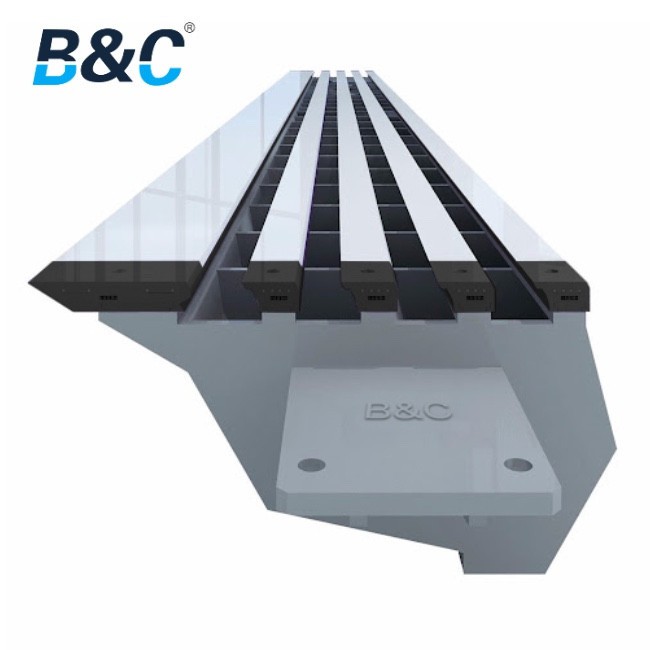
Suction box dehydration uses the suction of a vacuum pump to create a high pressure difference between the top and bottom of the paper, forcing the wet paper to dehydrate. It helps transfer the drier paper to the press section. During the jet fixing process, a vacuum box is installed under each spunlace unit. It uses vacuum suction. The water suction box sprays water from the water jet on the supporting mesh curtain into the water vapor separator. After that, the air is discharged by the blower and the water is sent through the pipe to the filtering device. The moisture content of the paper web after absorbing water can be reduced to 25% to 35%.
Why Use Ceramic Dehydration Element Wet Suction Box
After the hydrofoils, the preformed paper's moisture content is still very high, making it unsuitable for use in the pressing step. The energy consumption will be quite high if the prepared paper is directly moved to the vacuum area after hydrofoils. For the purpose of collecting and draining large amounts of water for recycling, a wet suction box must be placed before the vacuum region. The suction box's smooth surface might aid in enhancing the paper's evenness for a higher caliber.

Types of Ceramic Dewatering Elements
Forming Board
The forming board is used for paper making and installed in the forming section next to head box. With high wear resistant Alumina ceramic blades on the corrosion-resistant steel box for long-lasting stable suction performance. It has a decisive impact on the quality of the product being produced.
Hydrofoil
Ceramic dewatering element hydrofoils for paper making, applied to drain water from the wet web. Providing support and protection to the forming fabric and guarantees the uniform level. High wear and abrasion resistant Alumina ceramics with smooth surface and low friction for higher fiber using.
Wet Suction Box
The wet suction box with ceramic dewatering element for papermaking. The primary purpose is to remove the appropriate amount of water from the wet web to save energy consumption. A corrosion resistant steel box has a bottom tube can offer an extended period of time.
Low Vacuum Suction Box
Ceramic dewatering element low vacuum suction box installed between wet suction box and high vacuum suction box in the forming section of paper making machines. The main function of low vacuum suction box is to drain extra water which can not be drained by the forming board, hydrofoils, and wet suction boxes.
High Vacuum Suction Box
Maximum dewatering performance is achieved with the high vacuum suction box of the ceramic dewatering element. The primary purpose is to properly drain the wet web of water in the initial stages in order to reduce energy consumption overall. The corrosion-resistant steel is applied to the box body for long-lasting operation and simple maintenance because the water collected from the paper includes chemicals.
Felt Suction Box
High efficiency and long lasting felt suction box, also called Uhle box. Installed in the pressing section of paper making machines for drainage performance. Can be designed to be a vacuum box. Provide energy savings at the mill with correct size. Proper amount of water from the felt will be removed before the felt travels to the dryer.
Installation Order of Ceramic Dewatering Elements on the Wire Table
The order of ceramic dewatering elements is in paper run direction on the lower part of the wire as follows: forming board, dewatering foils, hydrofoils boxes, depression foil boxes and suction boxes.
The correct placement of the ceramic dewatering elements is essential for a quality dewatering to reach required percentage of the dryness after the wire part and required fibers formation. A steam box is used to increase a temperature of the paper before it enter the press part to get more of the dryness during pressing. The wire part length depends on the PM performance and on types of paper produced there. The wire length is also determined by the number of dewatering elements.
The PM endless wire is carried, guided and stretched by a row of rolls in the lower part of the wire table. The wire guide is located there and it guides the wire so that the wire would not leave the machine axis. Manual and automatic wire stretchers are used as well and they stretch the wire for a required value (2.5 – 8.0 N/mm). In case of a reverse run, the wire is cleaned by water showers. These remove mainly the fiber that got stuck during the stock dewatering and were not separated together with the paper web running into the press part.
The paper width is secured by format showers which separate the paper web edges. These edges appearing during dewatering are rough and their passage through the PM might prevent a non-problematic production due to the appearance of breaks.
We offer a cantilever construction version of the wire part which facilitates an easy and quick wire replacing. The structure is anti- corrosive and with an adequate height to allow an easy and accessible maintenance. All other complementing features such as wire run pneumatic guide, low-pressure and high-pressure shower systems, doctors, edge threading and breakage nozzles, are seen as standard for all wire parts supplied.
How do Ceramic Dewatering Elements Improve the Efficiency of Dewatering Processes?
Ceramic dewatering elements enhance dewatering efficiency primarily due to their exceptional wear resistance, smooth surface properties, and high thermal stability, allowing for faster water removal with minimal friction and consistent performance even under high-stress conditions, particularly in applications like paper production where high speeds and vacuum levels are involved. The smooth surface of ceramic elements facilitates efficient water flow through the dewatering process, maximizing the rate of water removal.


What is the Height Range of the Ceramic Dehydration Element Suction Box?
Suction box is a weldment made of stainless steel. It is fixed to the beams with stands which enable a height adjustment of the box with respect to a possible wearing of the lining. The cover can be made of ceramics and its height ranges from 30 to 40 mm. The suction zone comprises slots or round holes. The free cover area ranges from 40 to 50% of the total lining surface. The suction zone width in the cover is adjustable by sliding gates. The box vacuum is created by a vacuum pump. Connection to PM vacuum system is through a water separator. The vacuum regulation runs automatically using a control valve or can be done manually.
Why is Regular Service of Ceramic Dewatering Elements so Important?
Ceramic dewatering elements on paper machines are subject to natural wear due to permanent wire contact. If this continues to progress, this can lead to increased wear of the fabric and rising energy consumption. In the worst-case scenario, it can adversely affect the overall paper quality, resulting in increased production waste. To avoid this, regular grinding work or repairs to the ceramic elements are necessary.

How to Maintain Ceramic Dewatering Elements
Cleaning blades
Cleaning of the ceramic dewatering elements of the suction box can be done with high-pressure equipment. Cleaning should be done as soon as possible after the wire/felt is removed. The maximum pressure is 100 bar (1450 psi), maximum water velocity 30 l/min (8 gpm) and maximum temperature is 60 ºC (140 ºF). Cleaning with higher pressure or temperature or larger volume of water or with jet nozzles can cause damage to the fiber reinforced plastic material and the ceramic.
Normal maintenance
Visually check the ceramic, looking specifically at the surface and edges for breaks, cracks, loose segments and the bond line. Verify that the suction box is still firmly bolted to the frame. Make sure all dewatering elements, piping and screw connections are correctly connected to the suction box. Verify that the suction box is operating without undue vibration. Check to make sure all vacuum levels are at the desired levels. Verify that drainage is even and trouble free over the entire machine width.
Changing foils
If any foils are swapped out during a shutdown, the existing foils should be removed as soon as possible after the machine stops. This will prevent the foils sticking in place due to drying deposits.
Adjustment
Height of the suction box, i.e. penetration into the wire/felt by the suction box blades, can typically be adjusted with mounting bolts on the sides or underneath the suction box where it mounts to the framework.
FAQ
Q: What is ceramic dewatering elements?
A: Ceramic dewatering elements are much more wear resistant than their plastic equivalents. There are many different materials available, all of which can be tailored to meet customer requirements (machine speed, filler content, etc.).
Q: How long do ceramic dewatering elements last?
A: The lifespan of ceramic dewatering elements depends on the operational conditions and maintenance practices but typically ranges from 2 to 5 years. Proper maintenance and alignment with machine specifications can extend their service life.
Q: How does ceramic dewatering elements work?
A: Ceramic dewatering elements work on the principle of electric resistance heating. It's a form of electrical energy transformed into heat or thermal energy. This means that the heat is generated due to the high resistivity of the heating element when electricity is passed through it.
Q: What factors affect the performance of ceramic dewatering elements?
A: Key factors include the quality of the ceramic material, the precision of installation, machine speed, consistency of the pulp, and overall machine conditions. Performance may decline if the elements are subjected to uneven wear or poor alignment.
Q: Are ceramic dewatering elements customizable?
A: Yes, many manufacturers offer customized ceramic dewatering elements to fit specific machine configurations, operating speeds, and paper types.
Q: What maintenance practices are recommended for ceramic dewatering elements?
A: Visually check the ceramic, looking specifically at the surface and edges for breaks, cracks, loose segments and the bond line. Verify that the suction box is still firmly bolted to the frame. Make sure all dewatering elements, piping and screw connections are correctly connected to the suction box.
Q: What are the benefits of using ceramic over polymer dewatering elements?
A: In particular, ceramic elements have gained more attention recently, due to their superior performance, hydrophilicity, mechanical robustness, and high thermal and chemical stabilities, which allow at least double lifespan compared with the polymer elements.
Q: What are common signs that ceramic dewatering elements need replacement?
A: Signs include visible wear, chips or cracks, decreased drainage efficiency, and increased energy consumption. Regular inspections can help identify early warning signs and prevent unexpected downtime.
Q: Is ceramic dewatering elements good for the environment?
A: Their durability reduces waste and the need for frequent replacements, contributing to less environmental impact. This means that using a ceramic elements product can help you reduce your carbon footprint and do your part to protect the planet.
Q: Can ceramic dewatering elements withstand high machine speeds?
A: High-quality ceramic dewatering elements are designed to withstand high-speed operations, providing stability and performance without deforming or wearing out quickly.
Q: What types of ceramic dewatering elements are available?
A: The main types include ceramic foils, suction boxes, and hydrofoils, each designed for specific positions in the paper machine, such as the forming and press sections.
Q: How do ceramic dewatering elements improve the paper manufacturing process?
A: Ceramic dewatering elements are used to regulate and maintain the correct temperatures in the processes of pulp making and paper making. Their high temperature resistance makes them ideal for such applications.
As one of the leading ceramic dewatering elements manufacturers and suppliers in China, we warmly welcome you to buy ceramic dewatering elements made in China here from our factory. All customized products are with high quality and competitive price.
dewatering system, High Density LC Pulp Cleaner, Ceramic Dewatering Elements Forming Board Leading Blades