

In the realm of industrial machinery, particularly in paper - making and related processes, ceramic dewatering element flat suction box covers play a crucial role. These components are designed to efficiently remove water from the pulp, ensuring the quality and efficiency of the paper - making process. However, like any industrial equipment, they are subject to wear and tear, and the question often arises: Can a ceramic dewatering element flat suction box cover be repaired?
As a supplier of Ceramic Dewatering Element Flat Suction Box Covers, I have encountered numerous inquiries regarding the repairability of these products. To answer this question comprehensively, we need to understand the nature of these covers, the common issues they face, and the available repair options.
Understanding Ceramic Dewatering Element Flat Suction Box Covers
Ceramic dewatering element flat suction box covers are made from high - quality ceramics that possess excellent mechanical properties, such as high hardness, wear resistance, and chemical stability. They are designed to provide a smooth and efficient surface for water removal. The structure of these covers usually consists of a ceramic plate with precisely engineered pores that allow water to pass through while retaining the pulp fibers.
There are different types of ceramic dewatering covers available in the market, including Ceramic Dewatering Element Felt Suction Box Cover, Ceramic Dewatering Element Wet Suction Box Cover, and Ceramic Dewatering Element Curve Suction Box Cover. Each type is tailored to specific applications and operating conditions.
Common Issues Faced by Ceramic Dewatering Element Flat Suction Box Covers
- Wear and Abrasion: The continuous contact with the pulp and the mechanical forces during the dewatering process can cause wear and abrasion on the surface of the ceramic cover. Over time, this can lead to a reduction in the efficiency of water removal and an increase in the risk of fiber leakage.
- Cracking: Ceramic materials are brittle, and they can crack due to thermal stress, mechanical shock, or improper handling. Cracks can compromise the integrity of the cover and affect its performance.
- Clogging: The pores in the ceramic cover can become clogged with pulp fibers, dirt, or other contaminants. This can reduce the flow rate of water through the cover and decrease the dewatering efficiency.
Can They Be Repaired?
The answer is yes, in many cases, ceramic dewatering element flat suction box covers can be repaired. However, the feasibility of repair depends on the extent and nature of the damage.

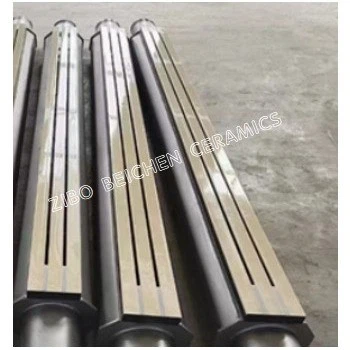
Minor Wear and Abrasion
For minor wear and abrasion, surface treatment can be an effective repair method. This may involve polishing the surface of the ceramic cover to restore its smoothness and the proper size of the pores. Specialized polishing equipment and techniques are used to ensure that the surface finish meets the required specifications. After polishing, the cover can regain its original dewatering efficiency.
Cracks
If the cracks are small and do not penetrate through the entire thickness of the ceramic cover, they can sometimes be repaired using ceramic adhesives. The adhesive is carefully applied to the crack, and the cover is then cured under controlled conditions. This method can restore the structural integrity of the cover to a certain extent. However, it is important to note that repaired covers may have slightly reduced mechanical properties compared to new ones.
For more severe cracks or when the crack has penetrated through the entire cover, replacement may be a more practical option. In such cases, the cost of repair may be close to or even higher than the cost of a new cover, and the performance of the repaired cover may not be fully guaranteed.
Clogging
Clogged pores can be cleaned using various methods. One common approach is to use high - pressure water jets to flush out the contaminants from the pores. Chemical cleaning agents can also be used in some cases to dissolve stubborn dirt and fibers. After cleaning, the cover should be thoroughly rinsed to remove any residual cleaning agents.
Advantages of Repairing
- Cost - Savings: Repairing a ceramic dewatering element flat suction box cover is often more cost - effective than replacing it with a new one. This can significantly reduce the operating costs for paper - making and other related industries.
- Reduced Downtime: Repairing the cover on - site or with a short turnaround time can minimize the downtime of the production line. This is crucial for maintaining the continuity of the manufacturing process and meeting production targets.
- Environmental Benefits: By repairing rather than replacing, we can reduce the consumption of raw materials and the generation of waste, which is beneficial for the environment.
When to Replace
While repair is a viable option in many cases, there are situations where replacement is the better choice:
- Severe Damage: If the cover has suffered extensive damage, such as large - scale cracking, fragmentation, or severe wear that cannot be effectively repaired, replacement is necessary.
- Outdated Design: With the continuous development of ceramic technology, older - model covers may become obsolete in terms of performance. In such cases, replacing the cover with a newer and more advanced model can improve the overall efficiency of the dewatering process.
Conclusion
In conclusion, ceramic dewatering element flat suction box covers can often be repaired, and the repair process can bring significant benefits in terms of cost - savings, reduced downtime, and environmental protection. However, the decision to repair or replace should be based on a careful assessment of the extent and nature of the damage.
As a supplier, I am committed to providing high - quality ceramic dewatering element flat suction box covers and professional repair services. If you are facing issues with your ceramic dewatering covers or are interested in learning more about our products, I encourage you to contact us for further discussion and procurement negotiation. Our team of experts will be happy to assist you in finding the best solution for your specific needs.
References
- "Ceramic Materials in Industrial Applications" - A comprehensive book on the properties and applications of ceramic materials in various industries.
- "Paper - Making Machinery: Principles and Operations" - A reference book that provides in - depth knowledge about the components and processes in paper - making machinery, including dewatering elements.